
From First Touch to Measurable Outcomes
Azalea Kim, MD, MBA, MPA · Oyinkansola Oluseun Ajanaku, MS
PRACTICAL INSIGHTS FROM THE FRONTLINES OF AI AND CARE DELIVERY — BUILT FOR IMPACT AT SCALE
INTRODUCTION
The most consequential decision in care is rarely clinical. A patient receives a message — a call, a text, a letter — with no established relationship and little context. Everything that follows depends on whether they respond. Engagement is not part of care delivery; it is what makes care delivery possible.
At Accompany Health, we approach this challenge by embedding randomization into outreach. Channels, timing, and sequencing are varied deliberately so that patient behavior — not operational habit — determines what works.

55%
Attributed patients: actively engaged

55%
Attributed patients: actively engaged
PRAGMATIC, RANDOMIZED MULTI-ARM STUDY
Studying the first moment
To build the foundation of our learning system, we conducted a pragmatic, randomized multi-arm study of 2,987 Medicare-Medicaid patients newly attributed to our care in the Detroit region.
The power of randomization is that it lets us set aside what we think we know and simply see what is—especially for patients long underrepresented in the evidence we have grown to rely on. In doing so, it offers a steady, practical way to learn what truly reaches people, one small, honest test at a time.
These differences are not noise. They are the structure of engagement.
RANDOMIZED OUTREACH — COLD CONTACT ESTABLISHED RATES
13%
SMS
contact rate
37%
Phone
contact rate
4%
Mail
contact rate
“The goal was not to identify a single best channel, but to understand how patients behave when first introduced to care. What emerged was a set of patterns that point toward a fundamentally different way of designing engagement.” – Azalea Kim, Chief Product Officer & SVP of Operations, Accompany Health
INSIGHT 1
Phone opens the door, but a one-time SMS also activated patients
Live calls reach the most patients. Phone achieved a 37% contact rate versus 13% for SMS and 4% for mail.

Insight 1 — Live phone calls were the most effective at establishing initial contact. But this advantage is specific to the first moment.
At the same time, this underscores the importance of using human interaction deliberately. When informed by context—what we know about a patient’s needs, history, and likely concerns—these moments become more than outreach; they become the foundation for ongoing engagement. From there, digital and AI-enabled channels can reinforce and extend that trust, but it is often the initial human connection that makes continued engagement possible.
INSIGHT 2
Once activated, channel matters less

SMS ≈ Phone (aRR ~1.0)
Insight 2 — Among patients who responded, visit scheduling rates were nearly identical for SMS and phone. Once engaged, the constraint shifts from trust to momentum.
This reinforces the value of asynchronous channels—like SMS—that allow patients to respond on their own time, without sacrificing effectiveness. Rather than relying on real-time interaction, engagement can progress through flexible, low-friction touchpoints that align with patients’ daily lives while maintaining comparable impact.
INSIGHT 3
Personas predict preferences — but don’t determine outcomes
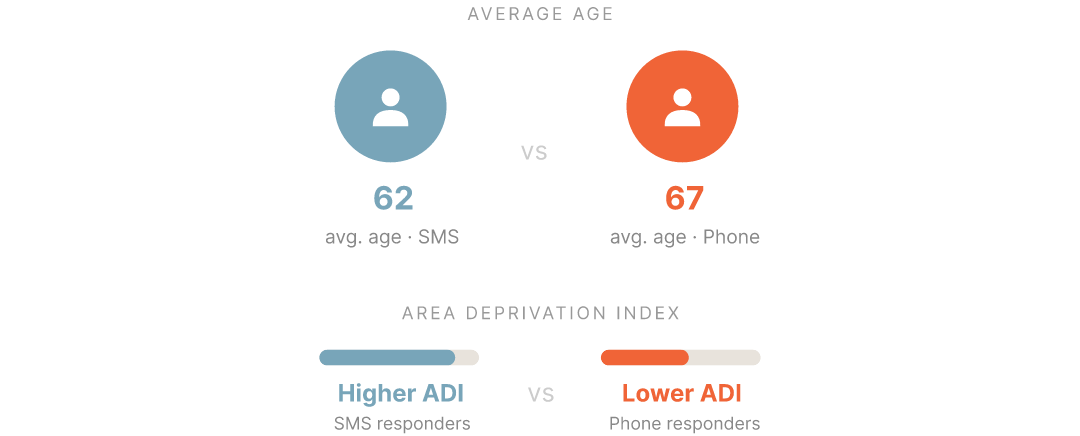
Implication: SMS does not have to mean less trustworthy—it raises the question of how to deliver outreach through this channel in a way that is credible, human, and grounded in real care. This is a core strength of Accompany Health’s approach: pairing low-friction access with high-trust engagement.
Insight 3 — SMS responders were younger and from higher-deprivation neighborhoods — a distinct population otherwise missed by traditional outreach.
Mobile-first outreach may be an important lever for reaching patients who are often missed by traditional approaches. Many socially vulnerable populations face barriers to phone-based or portal-driven engagement, yet may be more responsive to simpler, more immediate channels like SMS.
It also opens a broader consideration: if patients are already managing much of their lives through mobile devices, what does it mean for healthcare to meet them there more intentionally—without sacrificing trust or quality? Early signals suggest this shift could support more inclusive and timely engagement, particularly for those who have historically been harder to reach.
INSIGHT 4
Mail can signal trustworthiness — and for some drives strong activation

Implication: Mail may identify a smaller, but distinctly high-trust cohort—patients who are more likely to engage when outreach feels official, intentional, and credible. These individuals may not respond to more immediate or digital channels, but when they do engage, it often reflects a deeper level of receptivity that benefits from more deliberate, high-touch follow-up.
Insight 4 — Few patients responded to mail, but those who did were among the most likely to schedule a visit — a high-trust cohort that engages deliberately.
This points to an opportunity to rethink mail not as a legacy channel, but as a precision tool. Advanced mail strategies—grounded in data, timing, and personalization—can break through the noise by signaling relevance and importance from the first touch. When thoughtfully designed, mail can convey legitimacy, clarity, and care in a way few other channels can, reinforcing trust and prompting action among patients who might otherwise remain disengaged.
INSIGHT 5
No single channel wins

Implication: Engagement improves when channels are orchestrated around patient response—not predetermined sequences, but adaptive pathways that reflect how each individual actually engages. A missed call, a delayed response, or a moment of interaction becomes signal, guiding when and how to follow up next.
Insight 5 — When outreach methods were combined into coordinated, multi-touch sequences, engagement increased substantially — not from optimizing a single channel, but from allowing different channels to work in combination, adapting to patient response over time.
Over time, trust and activation are not built through a single touchpoint, but through the accumulation of well-timed, relevant interactions across human, digital, and AI channels. This requires intentional design—where each interaction reinforces credibility, respects patient preferences, and builds toward deeper engagement. When done well, the system doesn’t just reach patients more effectively; it learns how to engage them in a way that feels coherent, personalized, and worth responding to.
INSIGHT TO SYSTEM
From insight to system
These findings shift the problem from channel selection to sequence design. A missed call may indicate that a different modality is needed. A response to SMS may suggest readiness for asynchronous engagement. Each interaction provides information that guides what happens next.
AI extends this system — expanding responsiveness for patients who prefer digital interaction. At Accompany Health, AI is incorporated where patients have demonstrated readiness, evaluated by the same standards as other channels. It complements, rather than replaces, human interaction.
We distinguish between a patient’s clinical segmentation—their medical, behavioral, and social complexity, and risk of ED visits or hospitalization—and their engagement persona: how they respond to outreach, what builds trust, and what has shaped their behavior over time. These engagement personas are continuously refined through serial randomization and advanced data science methods. By integrating real-time data and AI-driven synthesis, we turn fragmented information into actionable insight, enabling our teams to make precise, timely decisions about how to engage each patient effectively.
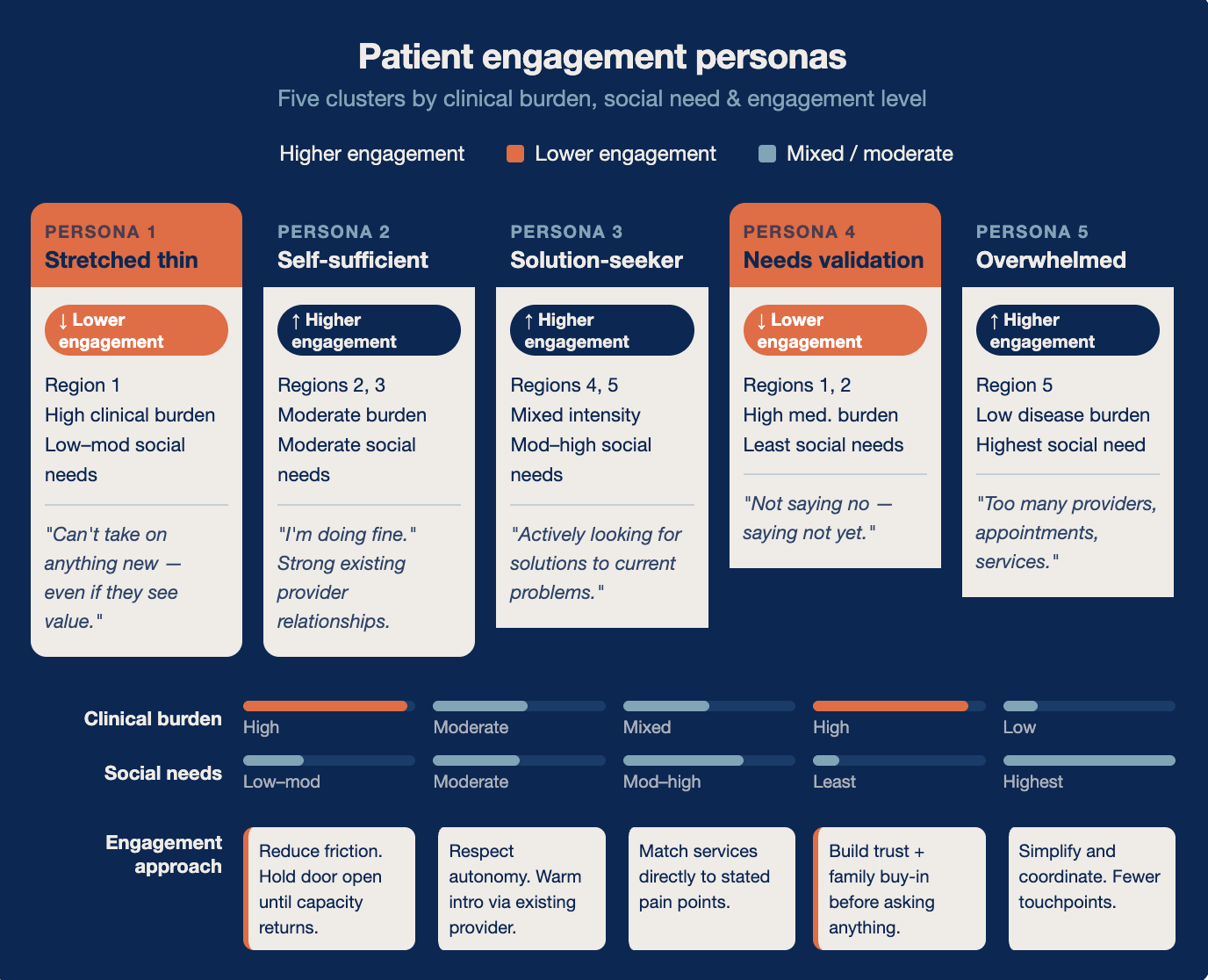
Accompany Health’s proprietary models enable a deep understanding of each patient from the very first touchpoint, allowing for tailored engagement strategies that meet patients where they are. This precision drives more effective outreach, stronger relationships, and sustained participation in care.
By designing our approach around the specific needs of each contract and payer partner, Accompany Health delivers a tailored engagement model—optimizing performance, improving outcomes, and driving measurable value across diverse populations.
Behind this is Accompany Health’s proprietary technology stack, designed to translate fragmented data into real-time insight and enable AI that augments human judgment. At its core is the Orion platform for omni-channel engagement and population health management, which captures every patient interaction to create a continuously evolving record that informs and refines the engagement journey. Orion also serves as the workflow engine for truly human-led, AI-enabled, team-based care—equipping multidisciplinary teams with the intelligence and tools to act in real time, while fully integrating the patient as an active participant in their care.
SETTING THE NEW STANDARD OF ENGAGEMENT
Setting a new standard for engagement
In Detroit, applying this learning-based model resulted in consistently high levels of patient connection.
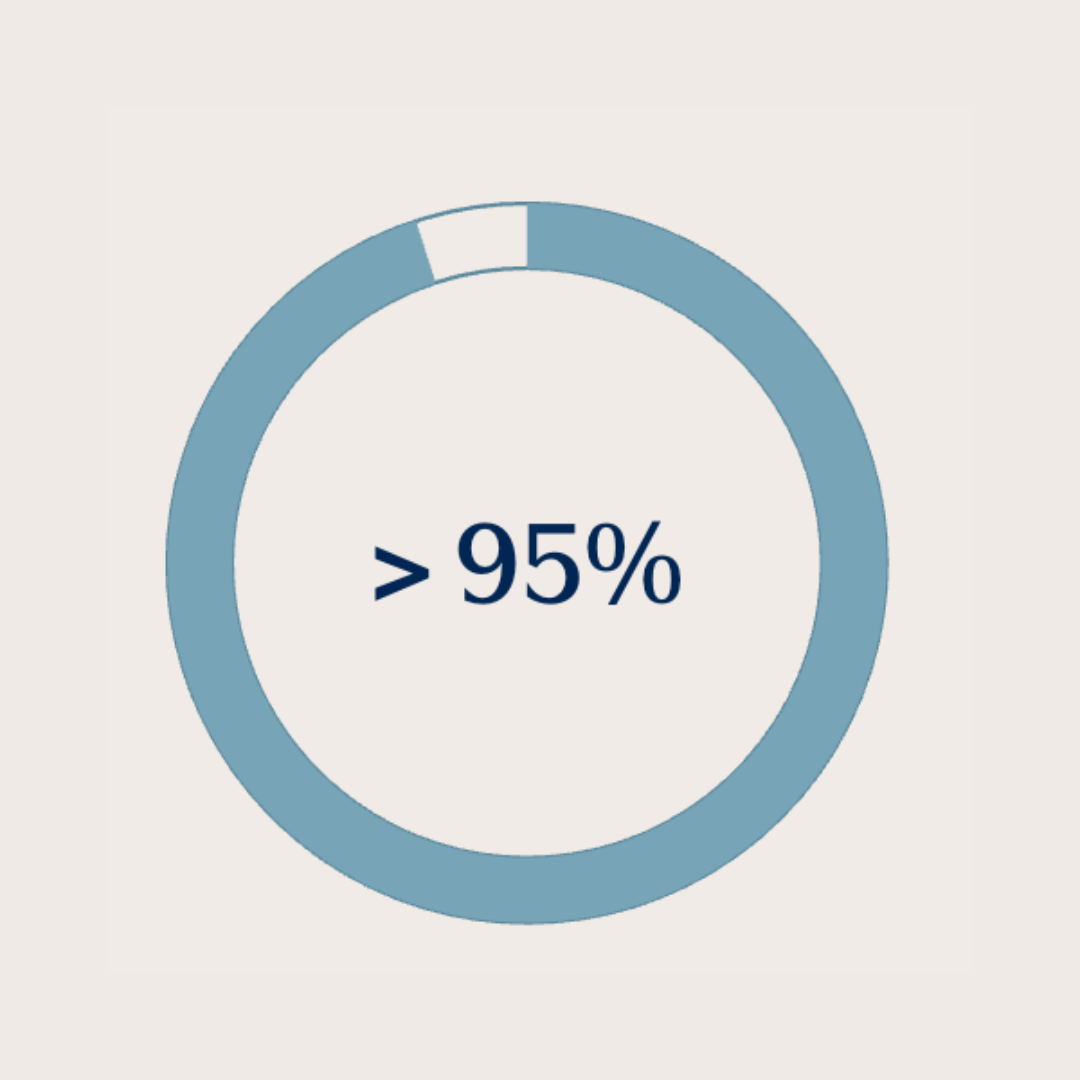
Attributed patients: connection established
We reach patients through a coordinated omni-channel outreach strategy, supported by data enrichment to maximize connection with attributed individuals—particularly those facing behavioral, social, and physical health barriers.
True engagement requires more: reshaping expectations, meeting patients where they are, and recognizing the right moment for change. Persistent, relationship-driven outreach builds the foundation for lasting engagement in care.
Each visit includes comprehensive assessment: behavioral health, cognitive and functional status, social care and benefits needs, medication reconciliation, chronic condition review, and risk factor screening. AI-enabled, in-home diagnostics detect cardiac and pulmonary abnormalities—including arrhythmias and structural disease.
These insights—drawn from APCs and CHWs in close collaboration with behavioral health, pharmacy, and nursing teams—are synthesized into AI-generated, personalized care plans and carried forward by a multidisciplinary team, supported by a 24/7 patient engagement hub. For patients with serious mental illness or complex substance use disorders, care is led by a Med-Psych–trained primary team, ensuring seamless integration of physical and behavioral health from the very start of our relationship with a patient.
Turning Engagement into Measurable Outcomes
Accompany Health’s engagement approach propelled this Detroit Medicare Advantage D-SNP population from a baseline CMS Star Rating of 1.7 to 4.5—an extraordinary shift. It’s the kind of compounding impact that transforms outcomes—and you can read how we did it here.

Baseline Stars Performance of the initial Detroit Cohort

Stars Performance of Detroit Patients Engaged with Accompany Health

THE TAKEAWAY
The Takeaway
AI will not transform patient engagement on its own.
That requires treating engagement as a learning system—one that allows care to become more responsive, more relevant, and ultimately more effective in closing gaps in outcomes.
“When you invest in the people doing outreach, you don’t just improve engagement numbers—you change what care feels like for patients. That’s what makes the difference between a program people tolerate and one they trust.” – Rahul Rajkumar, MD, Founder and Chief Executive Officer, Accompany Health.
In the end, engagement is not a problem to be solved. It is a learning system built to deliver repeatable outcomes at scale. And when it is built well, the system—and the people within it—begin to deliver on what care was always meant to be.
Looking ahead, we are expanding into patient-directed AI chat and companion applications to further accelerate continuous engagement and help triage complexity into manageable, actionable steps. These tools are designed to be deeply trustworthy, clinically grounded, and genuinely supportive—purpose-built for populations with complex needs, not as generic AI interfaces, but as extensions of a care model proven to drive outcomes. Informed by rich patient context—including clinical needs, engagement personas, preferences, and real-time signals—they create a responsive, personalized layer of support that simplifies what can feel overwhelming and strengthens continuity between interactions.
While many emerging AI companies and incumbents will pursue similar approaches, few can rapidly pair them with the rigor of a true learning system and the credibility that comes from consistently delivering high-quality care that patients trust—like Accompany Health. Transformative, scalable impact requires more than technology—it requires trust earned over time, grounded in evidence, clinical excellence, and real patient relationships.
Acknowledgments
The authors acknowledge the extraordinary efforts of the clinical operations teams—including the patient engagement hub, care program, shared services, value-based care, and practice operations teams—who work tirelessly to connect with patients and meet them where they are. Equally as important are the data science, marketing, product and engineering, and analytics teams, whose expertise and innovation bring this mission to life behind the scenes.
About Accompany Health
Accompany Health is a new model of primary care built for people with complex needs. It is redefining how care is delivered — through a human-led, AI-enabled, virtual-first approach designed to bring complete, dignified care everywhere.
Accompany Health partners with forward-thinking health plans to serve members through integrated medical, behavioral, pharmacy, nursing, and social care delivered in the home and virtually. Powered by a continuously learning care platform and highly responsive care teams, Accompany Health builds trusted, ongoing relationships that improve lives, strengthen outcomes, and lower total cost of care.
To learn more, visit us at https://accompanyhealth.com/