
An AI Native System Worthy of the People It Serves
PRACTICAL INSIGHTS FROM THE FRONTLINES OF AI AND CARE DELIVERY — BUILT FOR IMPACT AT SCALE
INTRODUCTION
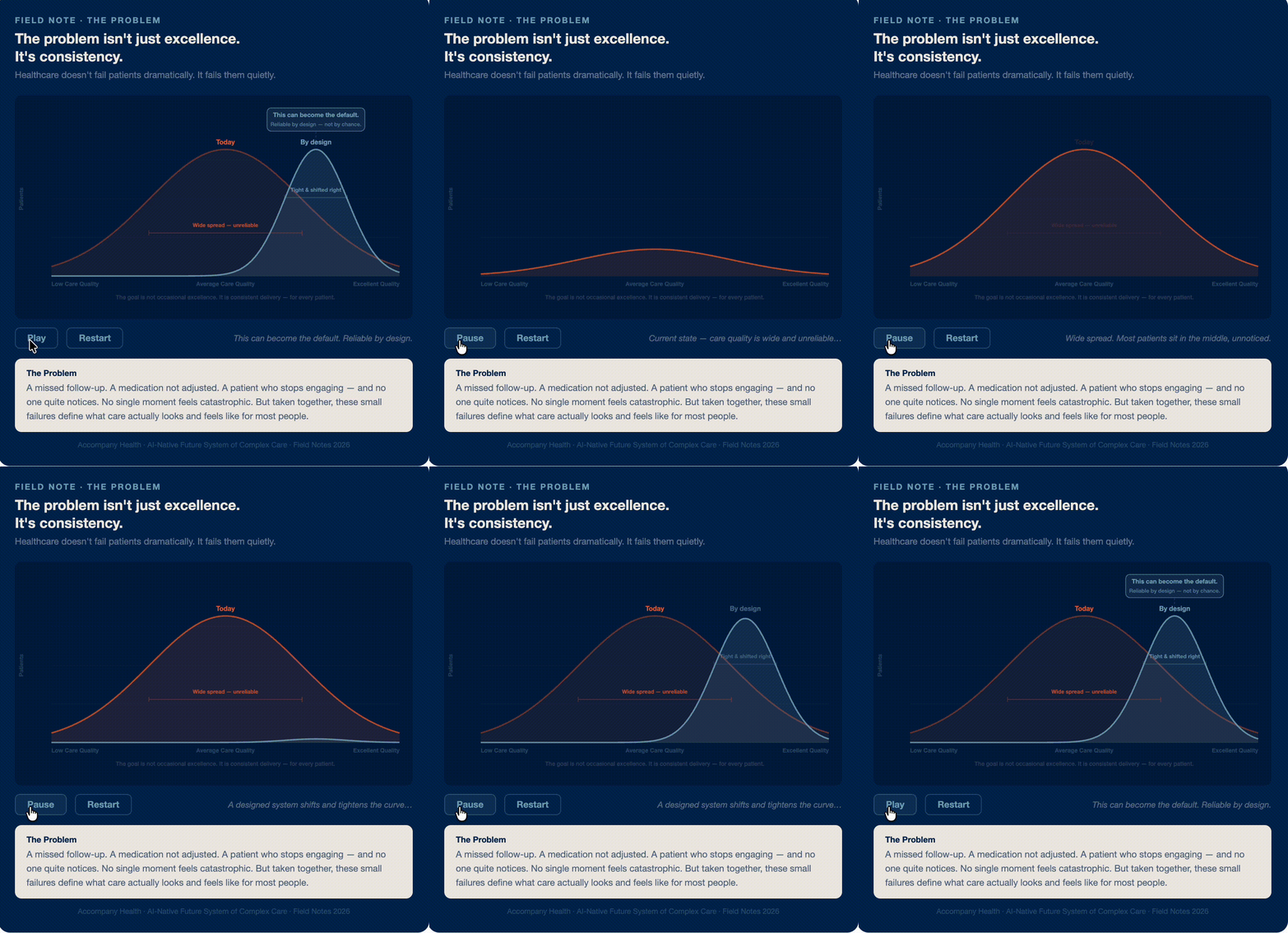
The Problem Isn’t Just Excellence. It’s Consistency.
Healthcare doesn’t fail patients dramatically. It fails them quietly.
A missed follow-up. A medication not adjusted. A patient who stops engaging — and no one quite notices. No single moment feels catastrophic. No alarm sounds. But taken together, these small failures define what care actually looks and feels like for most people. Especially the ones with the greatest need.
I have spent my career watching this happen — as a physician, an operator, a technology builder, and in the most clarifying role of all, as a caregiver. Each vantage point revealed the same truth from a different angle. The failures were never the ones we trained for. They weren’t dramatic. They were structural — baked into how care was organized, how information moved, how follow-through depended on memory and timing and whoever happened to be paying attention that day. When you are the one sitting beside the bed, waiting for a call that doesn’t come, watching a system that means well but cannot quite hold together for the person you love — the design failures stop being abstract. They become personal.
For a long time, I accepted this as the price of complexity. The system was too fragmented. The variables too many. The human capacity too finite. Consistency — the kind that doesn’t depend on luck or timing or the right person being on point — felt like something healthcare could want but never reliably build.
Then I started building with AI. And something shifted.
Not because AI promised to replace the human work of care — that framing misses the point entirely, and most of what is written about AI in healthcare misses it too. What AI offered was something more foundational: the ability to make the human work of care reliable. To build a system where the fundamentals don’t get forgotten. Where no patient drifts out of view because no one had the bandwidth to notice. Where consistency is no longer a function of heroics — but of design.
And while it seems uninspiring, it is the most honest description of the power of AI:
To fail less.
We have the rare chance to start anew, with AI and people together, building the system of care that patients always deserved.
This Field Note is a practical take on what it’s like building the best System of Care with AI — deliberately, rigorously, and always in service of the patient.
WHAT WE LEARNED
The Floor — AI Is Not Lowering the Bar. It’s Building A Floor We Can Trust.
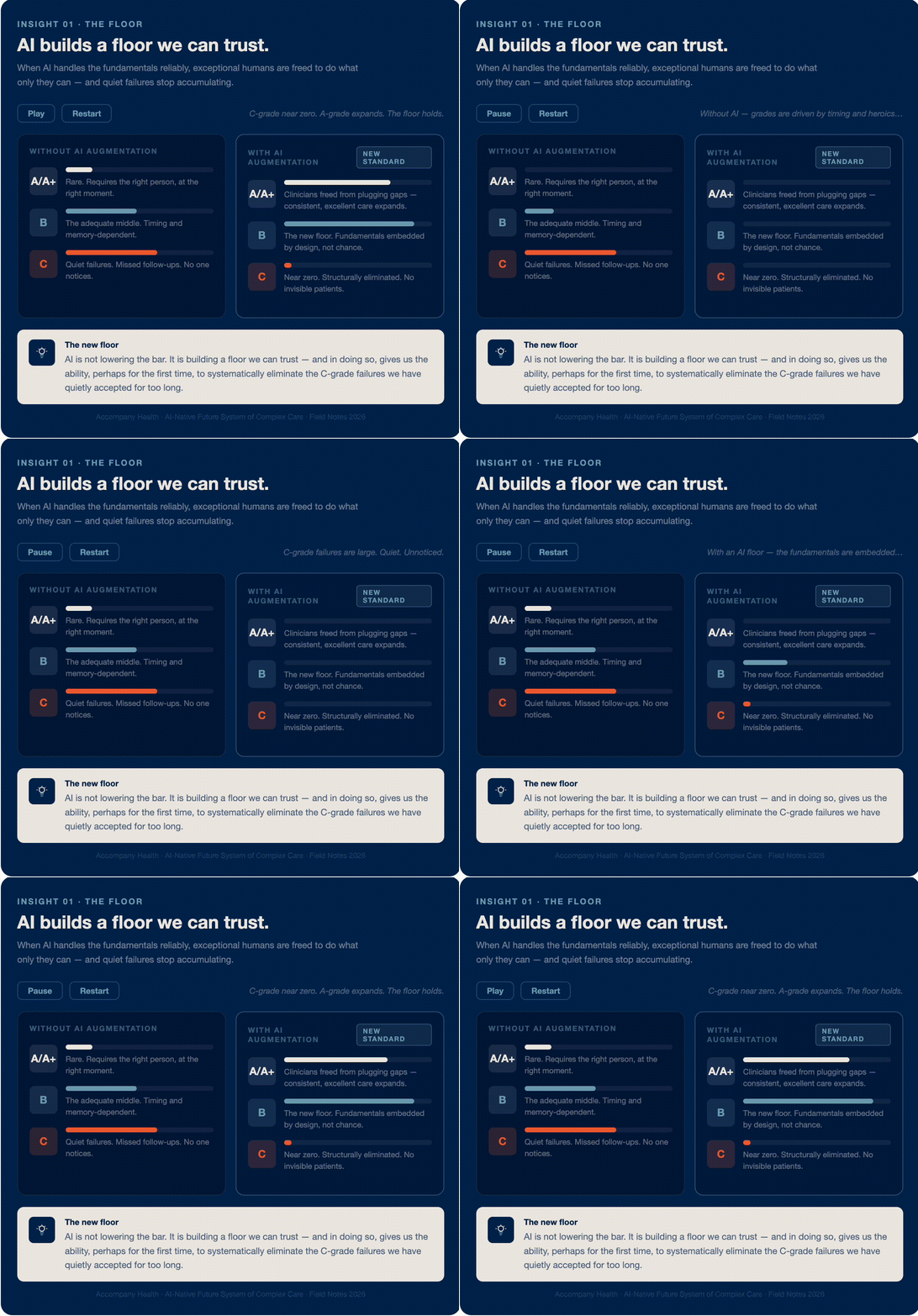
In every care system, there’s a natural distribution. There are moments of A-grade care — the clinician who catches what others miss, the team that anticipates before being asked. There’s the adequate middle. And then there’s the bottom: the quiet failures. The C-grade care that no one names, that rarely surfaces in reporting, and that accumulates, invisibly, into outcomes.
We’ve accepted this distribution as inevitable. We shouldn’t.
My late father, Dae-Joo Kim, MD, spent over forty years as a physician and educator at Montefiore and Albert Einstein. He believed in the discipline of fundamentals — that excellence wasn’t something you reached occasionally, but something you upheld consistently. When I brought home a 100 on an exam, I earned a dollar. A 97? I owed him three.
The lesson wasn’t about perfection. It was about not overlooking what should be done right, every time. Before I could eat dinner, there was a required volume of jump shots and foul shots to work through first. He pointed to Larry Bird the same way — that even after winning, Bird stayed on the court to take hundreds of extra shots no crowd ever saw. The excellence wasn’t in the highlights. It was in the repetition no one witnessed.
That standard is exactly what AI, applied with discipline, finally makes possible in healthcare. Not perfection — a floor you can trust. The right follow-up triggered without relying on memory. The right risk surfaced before it escalates. Not left to chance, not dependent on who happens to be on shift. Embedded into how the system operates.
When that foundation is in place, something important shifts. Clinicians stop spending energy compensating for gaps — chasing missing information, catching preventable errors, recovering from coordination breakdowns. That energy moves toward what only humans can do: applying judgment in complex situations, earning trust, and elevating care from good to exceptional when it matters most.
WHAT WE LEARNED
The Blind Spot — The Most Dangerous Failure in Healthcare Is Not Error. It’s Absence — and At Its Worst, Benign Neglect.
We talk a lot about medical error. We talk far less about the patients who simply fall out of view.
No dramatic incident. No root cause analysis. Just drift. A care plan that dissolves in a handoff. A patient who disengages, and a system that doesn’t notice until it’s too late. These are not edge cases. They are signals of how the system is designed — and what it cannot see.
And sometimes absence isn’t drift. It’s the system itself blocking the door.
The average wait for a primary care appointment is weeks. Behavioral health can stretch to months — if you can find someone who takes your insurance at all. Basic specialty care, the kind that prevents a manageable condition from becoming a crisis, is fragmented across systems that don’t talk to each other, priced out of reach, and geographically inaccessible for the patients who need it most. For the populations we serve at Accompany Health — complex, high-need, often under-resourced — this isn’t a friction point. It is the wall.
This too is a form of absence. Not because the system lost track of the patient. Because the patient literally could not be seen.
Absence is a structural failure. The system wasn’t built to keep people in view. But left unaddressed, absence becomes something harder to excuse: benign neglect. Not malicious. Not intentional. But normalized — a quiet accommodation to losing patients that we have dressed up as too complex.
So we’ve set a different expectation at Accompany Health: there should be no invisible patients. What AI makes possible here isn’t automation. It’s awareness. A continuous, real-time understanding of who has been reached and who has not. Which loops are open. Which early signals of risk are forming before they surface as crises. Not a static registry — a living system that tracks what hasn’t happened, not just what has.
The goal is not to do more. It is to fail less.

WHAT WE LEARNED
The Signal — Reliability Comes From Naming What Failed. Not Only Celebrating What Worked.
Coordination cannot be left to chance. It has to be made visible and measurable.
We think of this as a system of clocks — clear expectations for when something should happen next, and active awareness when it does not. When should we have heard back from a patient? How long is too long without contact? When does “not yet reached” become “at risk of being lost”
Alongside these operational questions are clinical ones, asked continuously in real time: Who did we not reach? What is the root cause of low adherence to a medication? Why does the current regimen not align with GOLD guidelines for COPD? Which loop did not close? Where did the system fall short?
These are not retrospective audits. They are live questions inside the system.
At Accompany Health, we evaluate performance through defect management — looking first not at what went right, but at what did not happen. By focusing on the inverse, gaps become visible in real time — as a living set of patients who need attention now, not a retrospective report that arrives too late.
But here is what makes this different from traditional quality measurement: we can actually do something about it. In the past, surfacing a defect often meant documenting a failure you couldn’t fully fix. Now, finding the gap is the beginning of closing it. The system doesn’t just show you who was missed — it enables you to reach them with systems of humans and AI agents that augments access and rigor in ways we could never have imagined. That changes everything about how a team relates to defect identification.
So over time, this becomes less of a measurement strategy and more of a culture — one where finding a defect is cause for action, not anxiety. Teams that once dreaded performance reviews begin to lean into the gaps, because the gaps are now solvable. Surfacing a missed patient isn’t a mark against the team. It is the team doing its job. It is how care improves. And as C-grade failures are identified and closed earlier, they begin to recede — not because we stopped looking, but because we built a system worthy of the looking.

WHAT WE LEARNED
Insight 4: The Constraint and the Conviction — When Does AI Not Belong. When to Go All In.
Technology, without discipline, accumulates. It rarely removes.
Healthcare is in an affordability crisis. The patients who bear that burden most are those with the greatest need and the fewest options — and the last thing they can afford is innovation that adds cost without adding care. Yet that is precisely what happens when AI is adopted without rigor: administrative costs that were already unsustainable climb higher, complexity compounds, and the people doing the work absorb the burden while patients feel none of the benefit.
So we hold a simple standard: if a deployment doesn’t reduce effort, it doesn’t belong. If it doesn’t change the fundamental unit economics of primary, behavioral, and social care — making it possible for the masses, even in the hardest to reach places — it isn’t innovation. It’s overhead. For the patients we serve, getting this right isn’t just an operational imperative. It is a moral one.
That discipline applies not just to whether we deploy AI — but to where and how. The decision is never a category decision. It is always a task decision. Some tasks that look complex are highly automatable. Some that look simple are not. Our discipline is to evaluate each one on its own terms: what is the input, what is the output, how complex is the inference, and what is the cost of being wrong.
We don’t retrofit. We rebuild from the ground up — because layering AI onto a workflow designed for humans doesn’t make it better. It makes it more complicated. The steps that were built around human memory, human coordination, and human follow-through don’t become elegant when a model is inserted between them. They become harder to see, harder to fix, and harder to trust.
Real redesign starts from a different question. Not: how do we automate what we already do? But: if we were building this from scratch, with AI and people as genuine partners, what would it actually look like? How do we build a culture and ecosystem where AI agents are truly part of the team — valued, accountable, and trusted by our human employees, our patients, their caregivers, and the providers we work alongside? That question changes everything — the steps, the handoffs, the points where human judgment is irreplaceable, and the points where the agent can simply do the work.
But constraint is only half the posture. The other half is conviction.
There are moments where hesitation is its own failure — where the right answer is to act, decisively and fully. Not to pilot the AI indefinitely. Not to keep a human in every loop as a matter of habit. But to let the agent act: scheduling, following up, closing the loop, reaching the patient at the right moment — because doing so delivers a faster, more attentive experience than the alternative.
And we are intentional about where the human stays in the loop. There are moments where AI does its best work quietly: synthesizing a complex history before a visit, summarizing what has changed across dozens of touch points, surfacing the patient whose trajectory is beginning to drift toward C-grade care before anyone has noticed. In those moments, AI is not replacing judgment — it is making judgment possible. But where the decision is material — where the next step carries meaningful clinical consequence — the human is not optional. That is not a limitation of the system. It is the system working as intended. We build our AI operations infrastructure with that boundary explicit, not assumed.
We do this in honest partnership. Patients deserve to know when they are interacting with an AI system and to trust it is working in their interest. Employees deserve to know that agents are taking what was grinding them down — so their attention can go where it matters most. Transparency is not a constraint on ambition. It is what makes the ambition credible.
When AI earns the right to lead, let it lead.
The discipline is in knowing when that threshold has been crossed — and having the conviction to act on it when it has.

WHAT WE LEARNED
The Design: Heroics Are Not a Care Model. Excellence Must Be Engineered – and Compounded.
It is easy, especially now, to believe that technology itself will transform care. It won’t.
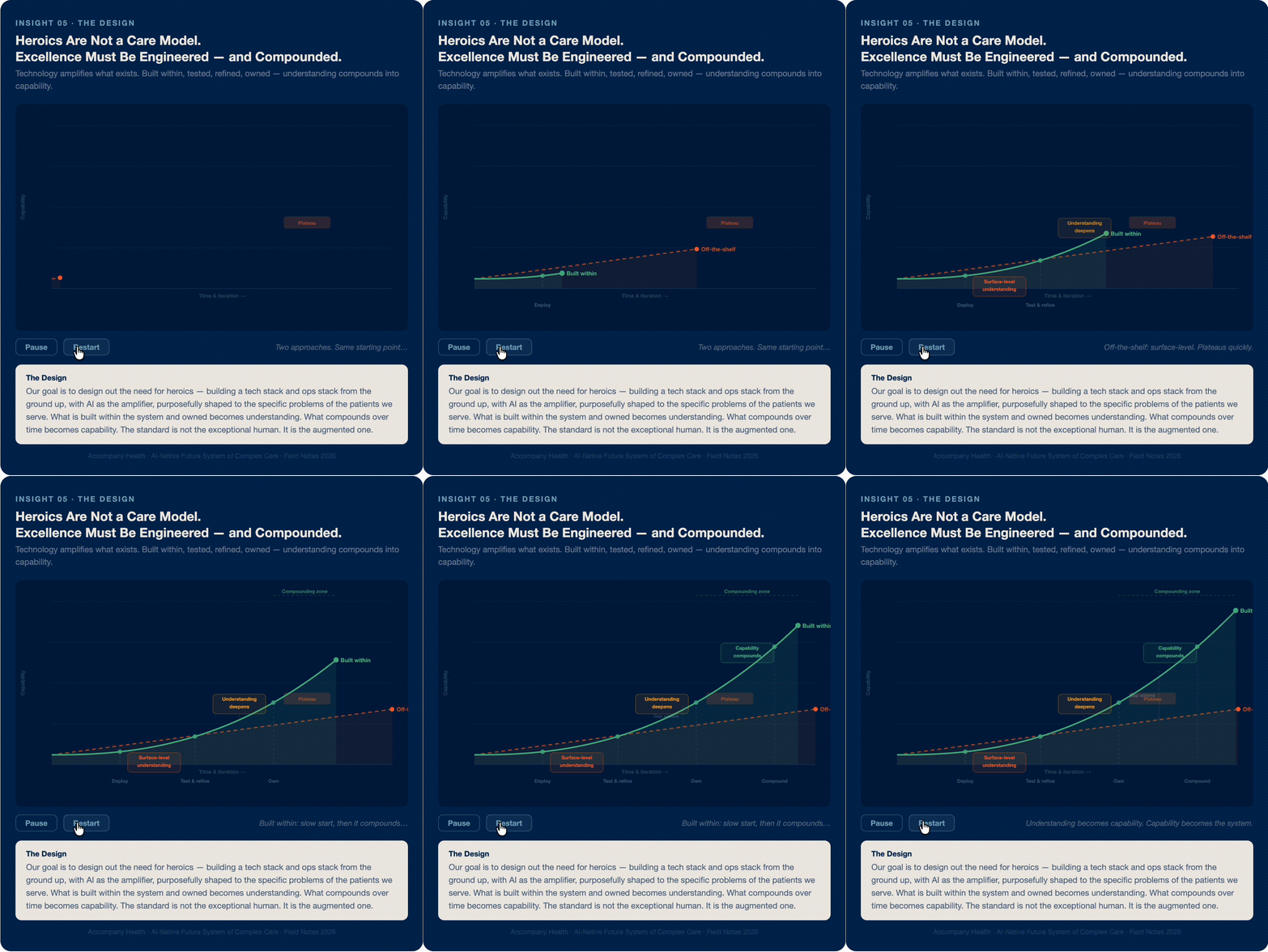
Technology amplifies what exists. If the system is fragmented, AI scales the fragmentation. What changes outcomes is not the presence of AI — it is the clarity of the system it is embedded within, and the discipline with which it is applied.
For too long, healthcare has run on heroics. The clinician who remembers to call. The care manager who catches what the system missed. The coordinator who holds it all together through sheer force of attention. These people are extraordinary. And we have built systems that require them to be — every day, at scale, without fail. That is not a care model. It is a debt we keep paying, quietly, in burnout and variation and patients who fall through the gaps whenever the hero isn’t there.
The argument for designing excellent systems is not that humans aren’t capable. It is that they shouldn’t have to be exceptional just to deliver what every patient deserves. When the system carries the context, tracks the follow-through, and surfaces what needs attention — the clinician’s judgment lands on something solid. They are no longer compensating for the gaps. They are doing the work only they can do: interpreting complexity, building trust, making the call that no algorithm should make alone.
That is the combination that becomes inarguable. Not AI replacing human care — but a system so well designed that human skill is finally deployed where it matters most, every time, for every patient.
The design work comes first. Not the AI strategy — but the care strategy. The tech stack and the ops stack have to be built as expressions of how excellent care actually unfolds: how information moves, how decisions get made, how follow-through is structured. When those systems are clear and coherent, AI has something worth amplifying. When they are not, it makes the noise louder.
We leverage the most advanced AI models not as off-the-shelf solutions, but as building blocks — purposefully shaped to address the specific problems of the patients we serve. When that work is externalized, it stays surface-level. When it is built within the system — tested, refined, owned — it becomes understanding. And over time, that understanding compounds into something more durable: capability.
That capability has to be grounded in data we trust, governed with rigor, and measured by what actually matters — not activity, but outcome. Not how many calls were made, but whether the patient was meaningfully engaged. Not how many care plans were documented, but whether care was delivered. Cost per workflow. Coverage across patients. The consistency with which the right thing happened, for the right person, at the right time.
THE TAKEAWAY
The Goal Was Never the Technology — It Is an AI Native System That Doesn’t Forget the Fundamentals
The measure of this work is not what the AI does. It is what it makes possible to stop worrying about.
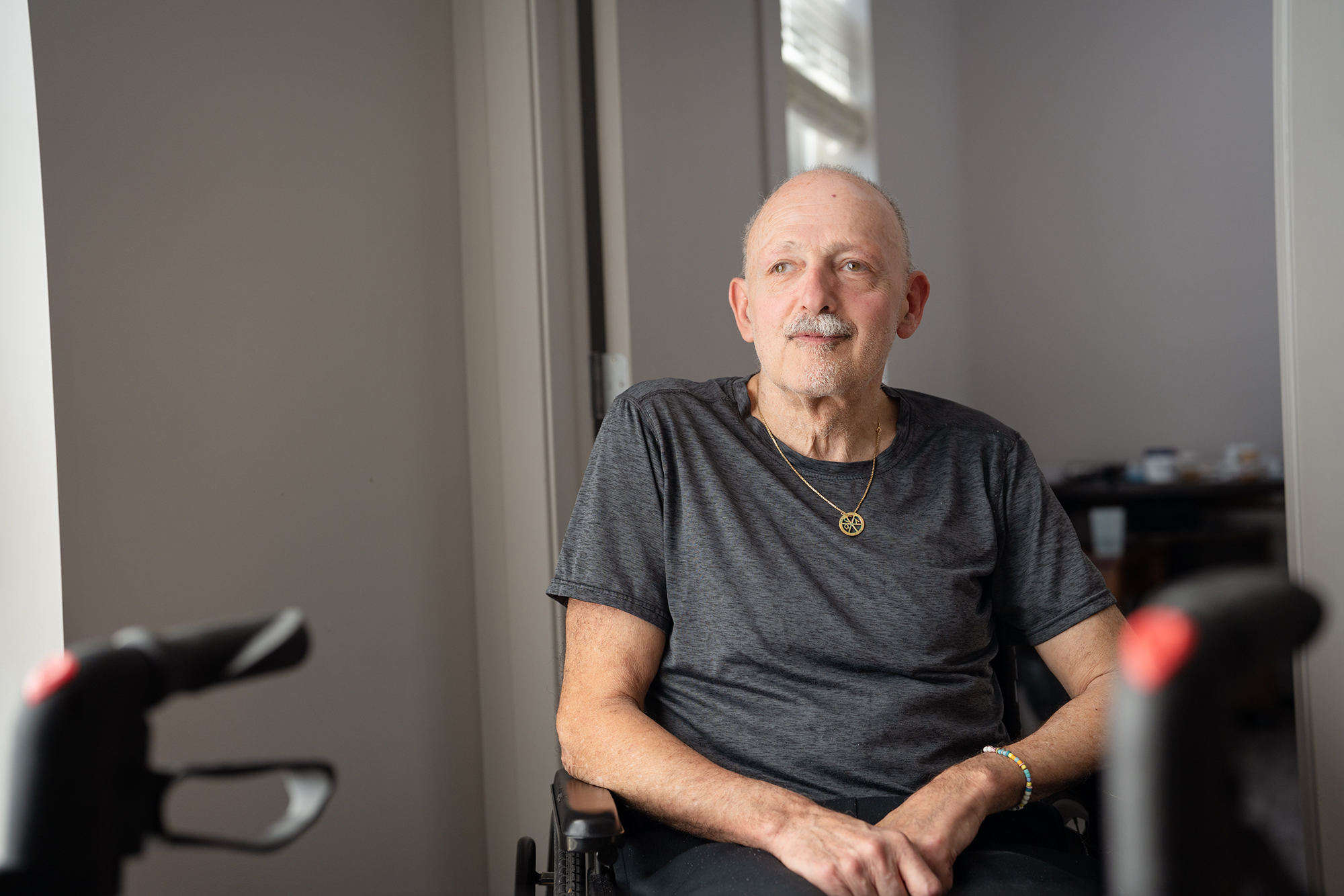
If we do this well, the technology recedes.
What comes forward is something healthcare has rarely sustained: a system that is attentive, that follows through, and that does not forget.
Where patients don’t quietly disappear. Where loops close. Where the small failures that have shaped outcomes for generations are no longer permitted to accumulate.
These are not failures of intent. They are failures of design. And we have treated them, for too long, as inevitable.
They are not.
Artificial intelligence doesn’t fix this by doing more. It fixes this by making it structurally impossible to do less. The burden of remembering, tracking, and reconciling is no longer placed on individuals working at the edge of capacity. It is embedded in the architecture of care itself.
And once consistency becomes the floor, the ambition shifts. The goal is no longer to produce moments of great care. It is to make great care the expected standard — not contingent on timing, not dependent on heroics, not reserved for those fortunate enough to navigate the system well.
That is the opportunity in front of us. And if we realize it, what remains is not the technology. What remains is something far more enduring:
A system that is worthy of the people it serves.
A note on how this was made: The ideas, arguments, and clinical perspective in this paper are entirely my own — shaped by years of practice, building, and staying close to the work. AI supported the process: helping refine language, sharpen structure, and develop the animated infographics that accompany this piece. I found that collaboration clarifying. It is, in its own small way, an example of what this paper argues for — AI doing what it does well, in service of work that remains fundamentally human.
About Accompany Health
Accompany Health exists because the system we describe in this paper — attentive, consistent, and worthy of the people it serves — doesn’t yet exist at scale. We’re building it.
We partner with forward-thinking health plans to deliver human-led, AI-native care to patients with complex needs — integrating medical, behavioral, pharmacy, nursing, and social care directly into the home and virtually. No fragmentation. No invisible patients. No care that depends on who happens to be paying attention.
This is what it looks like when the fundamentals don’t get forgotten.
To learn more, visit us at https://accompanyhealth.com/